

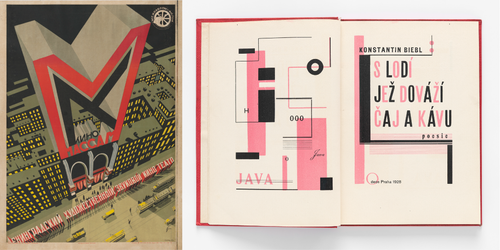
This salon places special emphasis on the development of typography into an independent medium of design. The visual poetry of around 1900, the image-text collages of the Cubists, and the linguistic and typographic experiments of the Dadaists and Futurists inspired typeface design after 1920. Conventions were joyfully and anarchically shattered, and new typefaces were designed that challenged the traditional foundries. Theoretical writings, however, initiated a return to order: in his 1925 manifesto, Jan Tschichold advocated above all for clear legibility.
It is part of the tragedy of the avant-garde that experimental design and the emancipatory potential of content became increasingly estranged. By the 1930s, some of its representatives became servants of power and even repression. New regimes appropriated avant-garde design innovations wherever they proved effective for mass propaganda. (In Italy, Futurism and Fascism always shared a common ideological foundation.) Some avant-garde artists fled into exile; others fell victim to totalitarian terror. In both its formal and thematic radicalism, graphic modernism temporarily became a thing of the past, but after World War II, it gained new currency.
This online lecture will be illustrated with selected examples, particularly from the poster collection of the Museum für Gestaltung Zürich.